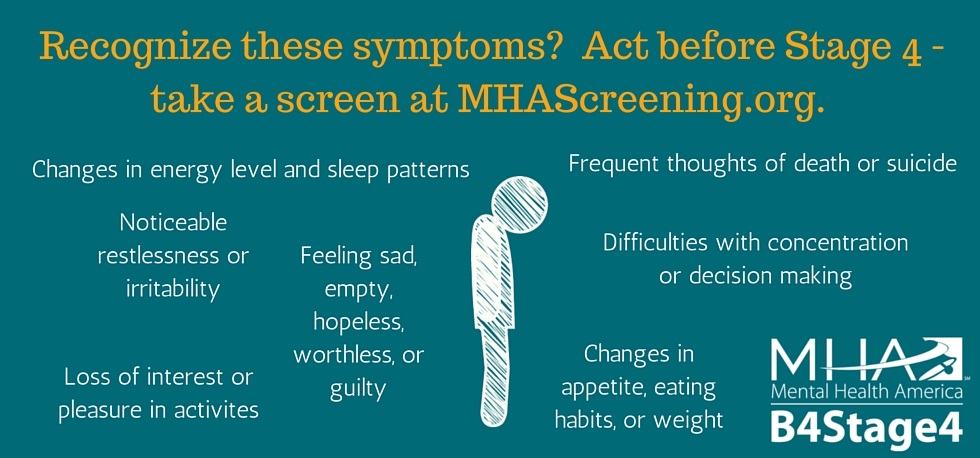
Schizophrenia by definition: According to the Surgeon General’s Report titled Mental Health, “Schizophrenia is characterized by profound disruption in cognition and emotion, affecting the most fundamental human attributes: language, thought, perception, affect, and sense of self. The array of symptoms, while wide ranging, frequently includes psychotic manifestations, such as hearing internal voices or experiencing other sensations not connected to an obvious source (hallucinations) and assigning unusual significance or meaning to normal events or holding fixed false personal beliefs (delusions).” (Page 269-270).
A January 29th CNN story covered the topic of a recent research discovery regarding schizophrenia, which we are using for this article to bring awareness to promising news. The article states: “This new study’s hypothesis is that people with schizophrenia have a variation of a gene called C4 that creates two varieties of proteins: C4-A and C4-B. Looking at the genes of 64,000 people, those who struggled with schizophrenia had C4 genes that produced overactive forms of the C4-A protein.”
What does that mean exactly? What the research suggests is that people with schizophrenia who carry these genes have a problem with a natural process in the brain called “synaptic pruning”. The gene C4 is also involved with regulating the immune function. The brain has cells that act like a cleaner to help the brain get rid of clutter. As one develops and learns things, these cells remove the redundant or weak connections between synapses. Synapses are like intersections on roads that carry information through the brain. After a good street cleaning, what’s left behind are clearer intersections and stronger, healthier connections.
Do this study’s findings mean a cure is in sight? Unfortunately, not exactly. It does bring scientists closer to treatment improvements. While should not be discounted that schizophrenia is a very complicated disease with much to learn still; there is a real victory here in considering that as more research is completed, it is a possibility that one-day schizophrenia may not disrupt people’s lives to the point that they cannot function. This is fantastic forward progress when considering what schizophrenia can be observed as in the public in this day and age.
The Schizophrenia that the public observes could be: That person passed walking down the street today who is carrying on a complete conversation with themselves. A person with these symptoms is often avoided by individuals or parents being protective of their children to the point of scurrying to the other side of the sidewalk, tightly holding their child’s hand, and reminding them to stay away from strangers. On another occasion, maybe there was a person standing in the middle of a busy intersection as you wait for the stoplight to go from red to green. Would you believe that a distortion of reality, in the form of voices in one’s head, told them to stand there?
Would you accept the fact that those same voices convinced that person to not eat last night’s dinner because it was poisonous? Even more relevant, consider the fact that the very same voice alienated that vulnerable person from life around them. In reality, these people are in a fragile state of illness and have yet to receive the help they need. According to CNN’s article, “The World Health Organization estimates that one in two people living with schizophrenia do not get any treatment.” Lack of treatment can result from not being diagnosed, or lack of adequate resources, both issues which can hopefully be amended as new knowledge is found about the C4 gene and its relationship to schizophrenia.
The Mayo Clinic claims on their information page for schizophrenia that: “Schizophrenia is a chronic condition, requiring lifelong treatment.” Of course this is not a newly discovered disease, there are thousands of treatment options out there, although not one specific treatment that works every single time. With a recent study completed, there is a renewed sense of energy being invested to complete more testing, which can only improve the treatment models.
How do these people begin to get help? Family, friends and advocates cannot necessarily go and talk about how the voices aren’t real; considering the person’s version of reality indicates there is no help needed. Instead, they will either live in a disordered life of instability that is controlled by possible voices and hallucinations; or potentially get picked up by local police for disturbance of the peace, in turn worse if they have committed a crime at the will of the voices. There is a substantial chance that the person will go into the justice systems as just another criminal. In the best case scenario, the police will will see they pose a threat to themselves, or others, resulting in the order of a 5150, which means being admitted to a psychiatric hospital to be observed for 72 hours, then get help. For that smaller number of people that get the chance to receive help, current treatment methods such as transitional housing and medication, are only the beginning; just at the discovery of the C4 gene’s connection to schizophrenia is to finding improved treatment methods.
While people can continue to use the supports and services that currently exist, scientist now have a better grasp on possible starting points to examine schizophrenia in future studies. In truth, this study brings a new light to the improvement of schizophrenia diagnosis and treatment in the real world.
References
Christensen, Jen. “Discovery One Step Closer to Cause of Schizophrenia- CNN.com.” CNN. Cable News Network, 29 Jan. 2016. Web. 29 Jan. 2016
Mayo Clinic Staff. “Schizophrenia.” www.mayoclinic.org. Mayo Clinic, 24 Jan. 2014. Web. 29 Jan. 2016.
U.S. Department of Health and Human Services. Mental Health: A Report of the Surgeon General. Rockville, MD: U.S. Department of Health and Human Services, Substance Abuse and Mental Health Services Administration, Center for Mental Health Services, National Institutes of Health, National Institute of Mental Health, 1999. http://profiles.nlm.nih.gov/ps/access/NNBBHS.pdf Web. 1 Feb. 2016
 ForeverWell